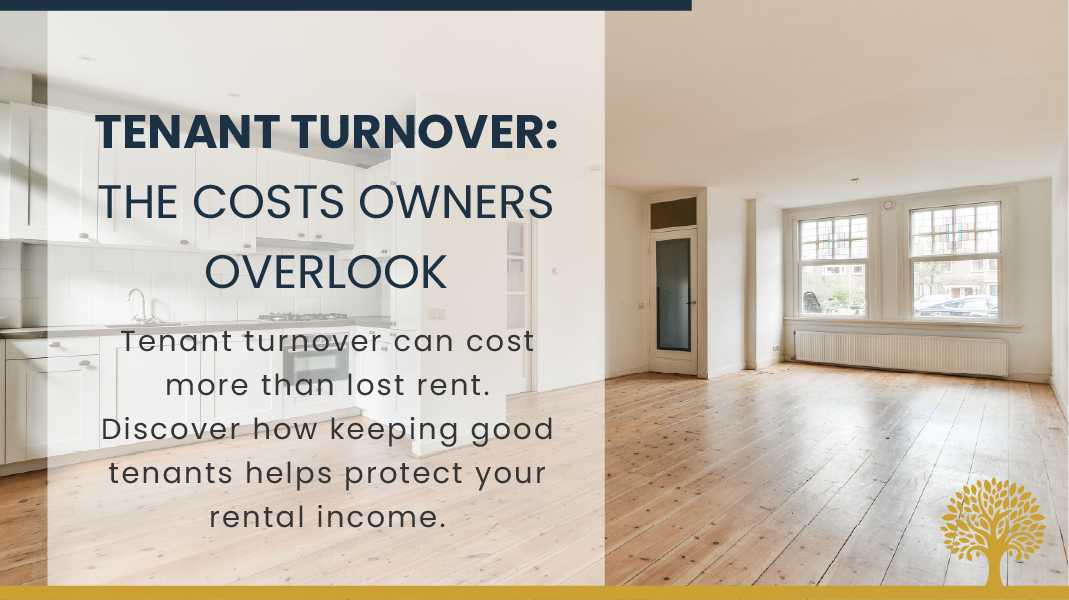
The Hidden Cost of Tenant Turnover in Concord and Fairfield
Short answer: Losing a good tenant to get $100 more a month usually costs more than it earns. On a Concord rental at $2,800, three weeks of vacancy plus $600 of make-ready work costs about $2,560, and an extra $100 a month takes about 26 months to earn that back. That's before leasing fees, utilities, or the risk of a weaker tenant. For most Concord and Fairfield owners, a fair renewal offer to a reliable tenant beats chasing the top of the market.
Key takeaways
- Vacancy is only part of the cost. Cleaning, paint, repairs, marketing, showings, screening, and carrying costs all add up.
- Do the break-even math. Divide the full turnover cost by the extra monthly rent to see how long a higher rent takes to pay off.
- The legal maximum is a ceiling, not a target. AB 1482 allows up to 8.8% in Contra Costa County and 8.6% in Solano County this year on covered units, and Concord's ordinance caps covered multifamily units at 5%, but the right increase is often lower.
- Retention comes from service. Fast maintenance, clear communication, and fair renewal pricing keep good tenants.
- Start renewals early. Planning 60 to 90 days out leaves time to price it right, or to market the home if the tenant leaves.
What turnover actually costs
When a tenant moves out, an owner can face:
- Lost rent for every day the home sits empty.
- Make-ready costs: cleaning, paint, carpet or flooring, landscaping, and minor repairs.
- Deferred maintenance that is easier to see, and harder to postpone, once the home is empty.
- Leasing costs: photos, listings, showings, screening, and lease preparation, plus any leasing fee.
- Carrying costs: mortgage, insurance, taxes, HOA dues, and utilities keep running.
Some of this can come out of the security deposit, but only for damage beyond normal wear and tear and for unpaid rent. Under California Civil Code 1950.5, paint, carpet wear, and routine cleaning after a normal tenancy are usually the owner's cost.
The break-even math
Here is a simplified example for a Concord rental. It's an illustration, not a forecast.
| Keep current tenant | Replace for $100 more | |
|---|---|---|
| Monthly rent | $2,800 | $2,900 |
| Vacancy (3 weeks) | $0 | about $1,960 lost |
| Make-ready work | $0 | $600 |
| Total upfront cost | $0 | about $2,560 |
| Months to break even | n/a | about 26 months |
If the home sits empty for six weeks instead of three, the break-even point roughly doubles. If the new tenant leaves after one year, the owner may never recover the cost.
What makes good tenants stay
Responsive maintenance. Repairs are the part of the tenancy residents notice most. A clear request process and fast follow-through prevent small problems from becoming move-out reasons.
Clear communication. Tenants who know who to call and what to expect are less likely to leave over frustration.
Fair renewal pricing. Renewal rent should track the market and the law. A modest increase for a tenant who pays on time and cares for the home is often worth more than a few extra dollars of rent.
Consistency. Clear lease terms and predictable policies make renewing the easy choice.
When replacing a tenant makes sense
Retention isn't always the right answer. Turnover can make sense when the tenant chooses to move, when the home needs major work, when there are documented lease violations handled through lawful procedures, or when rent is far below market and the law allows a meaningful adjustment. The decision should come from the numbers and the property, not habit.
Concord and Fairfield rules to keep in mind
Concord. Concord's rent ordinance caps increases at 5% a year on covered multifamily units built before February 1, 1995. Many other Concord homes fall under AB 1482, which allows up to 8.8% for covered units in Contra Costa County this year.
Fairfield and Solano County. Fairfield has no local rent ordinance. AB 1482 allows up to 8.6% for covered units in Solano County this year, and many newer homes are exempt if the lease includes the required notice.
Everywhere. After 12 months, AB 1482 just-cause rules apply to covered units, so ending a tenancy without a qualifying reason isn't an option. No-fault terminations require relocation assistance. Increases of 10% or less need 30 days' written notice, and larger ones need 90 days.
Start the renewal conversation early
We recommend reviewing renewals 60 to 90 days before the lease ends:
- Check the market. Compare current rents for similar homes nearby.
- Review the tenancy. Payment history, care of the home, and any maintenance issues.
- Check the legal limit and notice rules for that property.
- Make an offer the tenant is likely to accept, and give proper written notice.
- Prepare a backup plan in case the tenant decides to move.
How Legacy helps
We look at every renewal with the full math in view: market rent, the legal limit, the tenant's history, and what a vacancy would really cost. Our in-house maintenance team, Maintenance Works, helps us respond to repair requests quickly, which is one of the biggest reasons tenants stay. Our fee is a percentage of collected rent, so we earn nothing on a vacant home. We're paid to keep your property rented to good tenants, and we don't charge tech, vacancy, or marketing fees.
Related reading: 2026 rent increase limits for Concord and Fairfield and can you send a rent increase notice by email?.
Frequently asked questions
How much does tenant turnover cost?
It depends on the home, but lost rent plus make-ready work often runs one to two months of rent. Leasing fees, utilities, and repairs can push it higher.
Should I always raise rent to market at renewal?
Not always. Compare the extra rent with the cost of a possible vacancy. A modest increase that keeps a reliable tenant often produces more income over time.
Can I charge the old tenant for turnover costs?
Only for damage beyond normal wear and tear, cleaning to return the home to its move-in condition, and unpaid rent, under California Civil Code 1950.5. Routine paint and carpet wear are generally the owner's cost.
How early should I start a lease renewal?
About 60 to 90 days before the lease ends. That leaves time to price the renewal, give proper notice, and market the home if the tenant leaves.
How much can I raise rent at renewal in Concord or Fairfield?
It depends on coverage. Covered Concord multifamily units built before 1995 are capped at 5% a year. Other covered units are capped by AB 1482, which is 8.8% in Contra Costa County and 8.6% in Solano County this year. Exempt homes have no cap, but proper notice still applies.
Talk to us
Call our Concord office at (925) 262-8145 or our Fairfield office at (707) 317-9570. Request a free rental analysis.